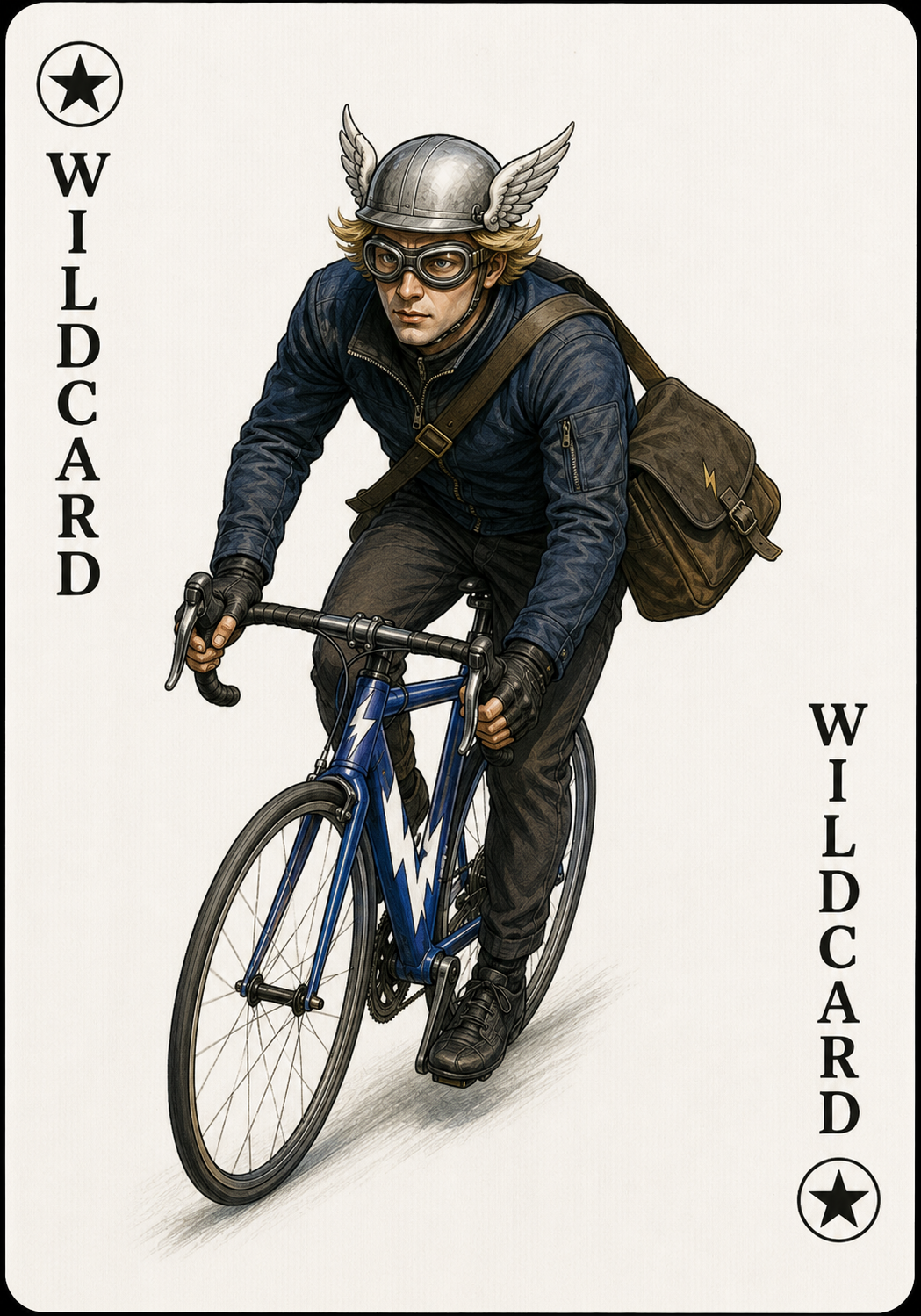
The Light-bearer
At the edge of the fairy lands, along the coastline, stands a tower, and from there the wall stretches inland. Long before the wall, and long before any borders, that tower stood, occupied by a magical sea-nymph. One night, her tower besieged by a hooved and horned satyr, she conceived a son, and when he was born, half sea-nymph and half satyr, he grew into a very powerful knight, and he rode up and down his stretch of coast, armed with his great lance, upon his great steed, and he was known as the great Saracen. Because a mad, old hermit had once warned the sea-nymph that a woman would be her son’s undoing, she had always cautioned her son to avoid all women, which was why he spent most of his time fighting with other knights. Any who came across the path of the great Saracen, be they from the dark world or the fairy lands, were challenged and defeated. He took their weapons and equipment, and any treasure they had, and stowed it all away in a cave. Over the many, many years that he ranged that coast, his horde grew into quite a sum. When the wars between the dark world and the fairy lands raged, and the wall went up, it was the greatest of all of the fairy knights, Lady Branwen, who was sent to deal with the Saracen, and she was his undoing. And the wall was completed, and from that day forth that tower was known as Branwen Tower. The wall remained occupied throughout the wars, and its fortifications frequently changed hands, but afterwards, in peace time, once the great Saracen’s treasure had been sufficiently excavated, this little strip of coast was of little interest to anyone, and the tower served mainly as a nesting place for birds, until a goodly medicine-woman took up residence there with her young daughter, finding in the surrounding area an abundance of healing herbs. Though by then it was a leaky, and drafty, old tower, the two of them settled in and made a nice home of it, along with the birds. Every evening, the young girl carried her bucket and her lantern all the way up the wall to the third post, just outside the nearest town, where she could fill her bucket with fresh water from the well. One night she saw a young boy by the well, and it appeared to her as if he might be waiting for her. The boy smiled when the girl approached, and she smiled back because she liked his smile, and he thought her smile was brighter than any he’d ever seen, so they smiled and greeted one another. After a time, the boy’s smile faded, and eventually disappeared altogether. The young girl asked if something was wrong, and the boy explained how, being from the dark world, he could only smile for a short time, and that he would have to return to the dark world soon, but that he was very happy to have given all of his smiles to her. She, being of the fairy folk, continued to smile, and asked the boy if there was anything she could do to help him. He said there was very little in the way of pleasant sounds or music in the dark world, so if she could bring him any bells she found, it would be very helpful, and if she couldn’t find him, just to leave them by the well. The girl agreed to bring him any bells she found. After a silence, the boy told the girl that he admired her bravery, and she wondered at that, so he explained how he, too, had once been a light-bearer. During the last war he was attached to a squadron that was placed there, and he had carried his lantern up and down the wall every night. The girl giggled and told him she only carried the lantern to light up her steps all the way to the well. He told her there were still many unseen eyes watching from both sides of the wall. “You should beware the evil ones,” he said, “for they hate the light, and those who shine brightest, they hate the most.”
“I am not afraid,” she replied.
“I know. You are most brave,” he said, “but you must be wary of the griffon.”
“The griffon?” she asked.
“Yes!” he implored, “the great golden griffon, who flies on the darkest night of the year, snatching away children, and they are later replaced in their homes with evil changelings. That is what happened to me, and now I must dwell in the dark world while a changeling lives in my home, making all manner of mischief, and filling my poor parents’ hearts with grief!”
The boy then gave the girl precise directions to his old home, which was quite simple to find because it was very near a well-known and ancient tree that was believed to house a spirit called a dryad. The next morning, the girl went there to see the changeling for herself. On her way, a wagon passed by and down beside the young girl, a bell from the bridle of one of the horses fell, so she picked it up and kept it in her satchel for the boy. When she passed by the home, she saw through the window that same young boy, only this boy had a twinkle in his eye, and was misbehaving and causing all kinds of trouble, and filling his poor parents’ hearts with grief. On her way back, the girl found another bell, so that evening she brought both of the bells to the well, but she didn’t see the boy, so she left the bells there. Through the week she found three more bells—towns in the fairy lands are rather musical places, so it wasn’t as uncommon as you might think, and now that she was looking for them, she seemed to find bells everywhere—and she left them at the well whenever she went. After the boy had collected all five of the bells, he fastened them to a large wire ring, then he took some fluff from the bullrushes and stuffed the bells with it, to keep the clappers from striking. Then he ventured deep into the dark woods and snuck deep into the cave of the great golden griffon. Being forced to dwell in the dark world, he had gotten quite good at sneaking around. When he found the giant beast where it lay fast asleep, he secured the wire ring around one of the great talons. Then, he carefully removed the stuffing from each of the bells, and when that was done, he thought to himself: Oh! how I wish I could pluck one of those great golden feathers, and I would keep it with me always, and when I am back at home in fairy land, I could wear it in my cap and smile when I go to see my lady. But he didn’t dare wake the griffon, being so deep in the cave, for he would never make it out alive.
The next night, the boy went to the well to see the girl, and when she arrived he was smiling, and his smile warmed her heart, so she smiled back, and her smile warmed his heart, so they smiled and greeted one another. He thanked her for the bells, and she said she had brought five of them, and he said he had gotten them all. By then the boy’s smile had faded, and the girl told him how she had gone to his old home and seen the evil little boy inside, causing all kinds of trouble. This, of course, saddened the boy even more, though it was difficult to tell. The girl then asked the boy if she should warn his mother of the evil changeling.
“No. You mustn’t,” the boy said, suddenly alarmed. “That will only make him even more troublesome.” Then the boy felt compelled to impress upon the girl just how important her light was to many of the children in the dark world. He said there were others like him, who had been snatched away by the griffon and replaced with changelings, and they were kept on the dark side of the wall, unable to go home. There wasn’t much light on their side of the wall, but what little light they got, they were gathering, and they were keeping it underground in a secret engine that the grand mage, Merlin, had made for them. “When we have gathered enough light,” he said, “the grand mage will use his sorcery to break the spell, and send all of us home again.” The light from the girl’s lantern, the boy insisted, was of utmost importance, and would be so, especially, on the darkest night of the year, which was fast approaching.
The girl reached out and took the boy by the hand. “I’ll not be afraid,” she said. “I would shine my light just for you, just to see you smile again, but knowing now what you’ve told me, I will shine as bright as I can, for all of you. I’ll not fear the griffon!”
“You are so brave!” the boy cried. Unable to smile any more, he could only shed tears. “I believe,” he continued, “when I was a light-bearer, my light shone almost as bright as yours, and together we would shine brighter than any star, and all of the evil in the world would be blinded by our light.” Before leaving, the boy told the girl about his journey to the cave of the great griffon, and how he had secured the bells around one of the great talons, so that when the griffon was near, she would hear it.
“Now who’s the brave one!” She smiled her brightest smile, kissed the boy on the cheek, and they parted.
On the darkest night of the year, when the young girl’s mother sent her out to fetch a pail of water from the well, the girl was not afraid, but she did listen intently for the griffon. When she heard the bells, she ducked and hid herself away, and she felt a great gust of wind, and saw the great, shining talons, as the giant beast passed overhead, but the girl was unharmed. The second time she heard the bells, she ducked down and waited, and when she saw the griffon, she reached up, with no fear, and took hold of one of the great golden feathers, and plucked it as the beast flew by, and she kept it with her always. She filled her bucket at the well and made it home safely, then she went back and forth a few more times, deftly avoiding the griffon each time she heard the bells, to ensure the lost children of the dark world could gather enough light—and they did! And the grand mage, Merlin, used his sorcery to break the spell, and sent all of the children home. And whenever the kings and queens, and nobles, and ministers and counsellors, of the fairy courts reached a standstill in their talks, they sent a runner all the way down to the end of the wall, to Branwen Tower, to ask the girl with the griffon feather, and she always had the answer.
Bonus Content!
Courier of Justice
This short sci-fi piece, Courier of Justice, I offer freely to the public domain. Any and all artists or creative people who find themselves inspired by this piece, or the characters, or the story, may do with it as they will (as long as credit is given where it is due).
[WARNING!] Contains mature themes, discretion advised (kids, ask yer parents).
Download PDF here.